
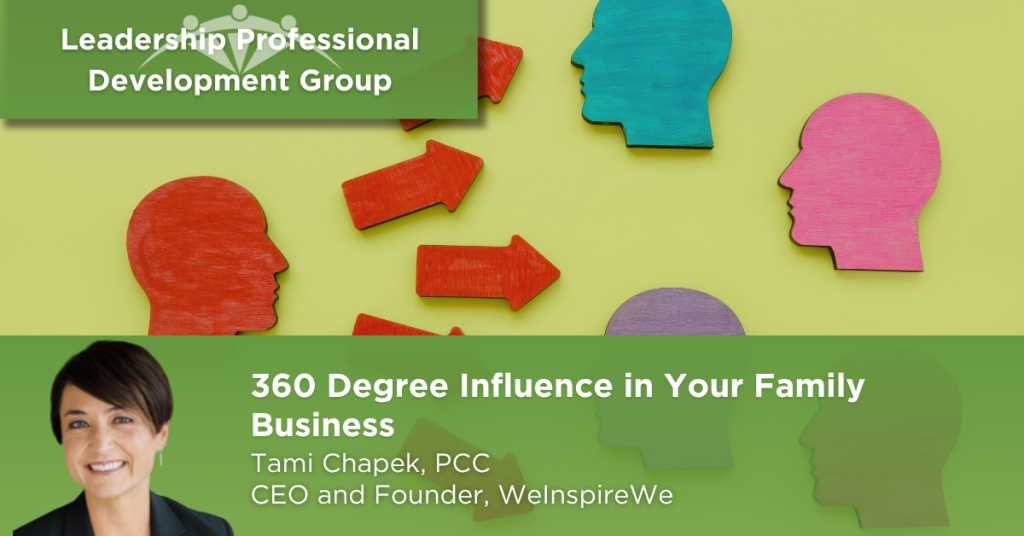
In a family business, a title can tell you who has the authority to make a decision, but it does not always tell you whose perspective will shape that decision—or who can bring others along when it is time to act.
That distinction matters. A leader can direct someone to complete a task, but building genuine commitment requires something more. It requires influence: the ability to connect with people, understand what matters to them, and help them see a path forward.
Influence is not manipulation, and it does not mean avoiding hard decisions. It means recognizing that people are more likely to support an idea when they trust the person bringing it forward, understand its purpose, and have an appropriate opportunity to shape its success.
Family businesses bring a distinct dimension to this work. Business decisions may also touch ownership priorities, family relationships, and the legacy of the people who built the organization. A process that no longer supports growth may still represent the founder’s ingenuity. A proposed role change may raise questions about both performance and family identity. If we address only the business case, we may miss what the decision means to the people involved.
That does not mean every stakeholder must agree before the business can move forward. It means effective leaders take the time to understand the full picture.
Influence in Every Direction
Influencing up may mean bringing a recommendation to an owner, family leader, or board. The goal is not simply to present more data. It is to demonstrate sound judgment: What is happening? Why does it matter now? What options have you considered? How does your recommendation support both business performance and long-term stewardship? Respecting the company’s history can help a leader make a stronger case for its future.
Influencing across requires collaboration with peers who may have different responsibilities and priorities. When we lead only from the needs of our own department, it is easy for a shared challenge to become a contest over whose agenda wins. Influence begins with curiosity: What is your colleague trying to accomplish or protect? Where do your goals overlap? What could you solve together that neither of you can solve alone?
Influencing down involves more than assigning work. It means helping employees understand the outcome, giving them the authority to make appropriate decisions, and providing the support and guardrails they need to succeed. When every decision comes back to the leader, the organization’s capacity is limited by that one person’s time. Strategic delegation creates ownership—and helps develop the leaders the business will need next.
Across all three directions, the human connection is essential. People want to know that their experience is understood, their concerns are taken seriously, and their contribution matters. Listening is not a detour from getting results. Often, it is how we discover what will make a good decision workable.
A Few Questions to Consider
Before your next important conversation, pause and ask yourself:
- What outcome am I really seeking? Do I need compliance, input, support, or someone’s active commitment?
- What matters to this audience? How might they see the issue differently through a family, ownership, or business lens?
- What history am I walking into? Could my recommendation be heard as criticism of something—or someone—that has been important to the company?
- Have I invited genuine buy-in? Have people had a chance to raise concerns or help shape the approach, or am I assuming silence means agreement?
- Where am I holding on too tightly? What decision could someone else own with clearer expectations, authority, and support?
The strongest leaders do not rely on authority alone, even when they have it. They use their position responsibly while building the trust, clarity, and shared ownership that allow others to contribute at their best.
In a family business, that ability can help preserve what makes the organization special while giving it room to grow. It is how one leader’s impact extends beyond their own decisions to the people around them—and to the future of the business.
If you would like to strengthen influence, buy-in, and leadership ownership within your family business, I would love to connect. Reach out to me, Tami Chapek, through WeInspireWe to learn more or start a conversation about what your leaders need most.
Tami Chapek, PCC
CEO and Founder | Executive Leadership Coach
WeInspireWe

If you are interested in topics that address leadership roles in your family-owned business, please join us at our Leadership Development monthly sessions that Tami facilitates. Contact Lorna at lflint@familybusinesscenter.com if you have any questions about this group.