
How curiosity, empathy, and better conversations help us bridge generational differences.
“They always have to question everything.”
“They never want to try anything new.”
Sound familiar? When someone approaches work differently than we do, it’s so easy to turn a frustrating moment into a broad generalization. We say “they always” or “they never,” and one experience becomes a story about an entire group. Add a generational label, and suddenly we feel like we have them figured out.
I think we’ve all done it. But once we decide someone “always” or “never” does something, we can stop being curious about why.
As I was digging into Leadership Skills to Bridge the Generations class for the leadership series this month, I kept coming back to this: What might we learn about someone if we gave them a chance to surprise us?
The Experiences We Carry into Work
Think back to the messages you heard about work when you were growing up or just starting your career.
Did someone tell you to keep your head down and let your work speak for itself? To be the first one there and the last to leave? To find something you love? To make sure you could always take care of yourself?
Those messages can stay with us. We carry them into our first jobs, into our relationships, and eventually into the expectations we have of other people.
Generational context gives us a window into some of those influences. The technology available to us, the economy we entered, and the changes happening around us all become part of our experience.
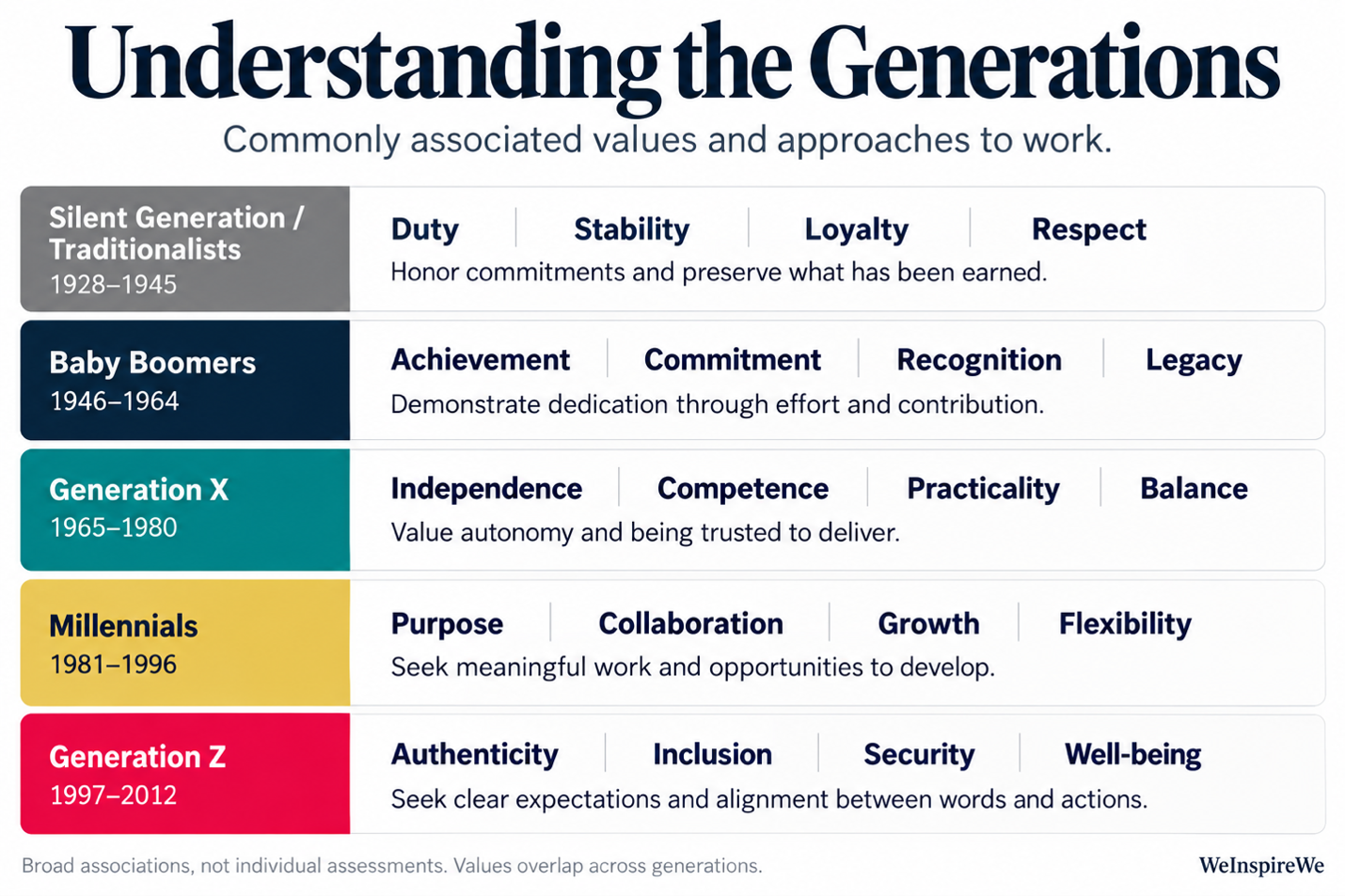
Do you see yourself in your generation’s description? Or are you thinking, “Well, some of that fits, but…”
You might connect fully with your generational associations – or you might connect with the independence associated with Gen X, the emphasis on purpose associated with Millennials, and the commitment associated with Baby Boomers. People are wonderfully more complicated than a birth-year range.
That’s where the leadership work gets interesting.
Two People, One Very Different Definition of Commitment
Imagine this scene. It’s 5:15 p.m. One employee is still at their desk, working through a customer issue. Another has packed up and left after finishing their priorities for the day.
The first person thinks, “I wish everyone cared as much as I do.”
The second might be thinking, “I worked hard to get everything done so I could be home with my family.”
Now imagine those two people are on the same team—and neither knows what the other is thinking. It would be easy to turn this into a story about age, work ethic, or loyalty. But what do we actually know?
Maybe the person staying late takes pride in being dependable. Maybe they’re overloaded and need help. Maybe the person leaving has delivered everything expected of them. Maybe expectations about coverage were never clear.
We won’t find out by watching the clock and assigning meaning to it. We find out by having a conversation and asking:
- “What does being a dependable teammate look like to you?”
- “What do we need from each other when a customer issue comes up?”
- “Is the way we’re working sustainable?”
Those questions give us something useful to work with.
Our Own Approach can Become the Standard
I believe deeply in authentic, strengths-based leadership. Understanding who we are helps us recognize what we bring and how we can contribute.
It also asks us to notice when our own preferences have become the yardstick for everyone else.
If you value independence, someone’s request for regular check-ins might feel unnecessary. If you process ideas by talking them through, a quiet colleague might seem disengaged. If you learned to earn trust by putting in years before speaking up, a new employee’s suggestions might catch you off guard.
None of those first reactions makes you a bad leader. They make you human. The opportunity is to pause long enough to ask, “What else could be true?”
That person asking questions might care deeply about getting it right. The quiet colleague might have a valuable idea they need time to form. The new employee might see an opportunity the rest of the team has stopped noticing. Curiosity gives us a chance to find out.
Feeling Valued is Personal
Most of us want to know that our contribution matters. But the way we experience that can look very different.
One person lights up when you acknowledge their work in a team meeting. Another would much rather hear a thoughtful thank-you in private. Someone feels trusted when you give them space. Someone else feels supported when you make time to talk through a challenge.
And sometimes, what we need changes. A confident, experienced employee can still need guidance in a new role. A person who usually enjoys extra responsibility may be navigating something outside work that has changed their capacity.
This is why understanding people needs to be an ongoing conversation.
Try asking:
- “What part of your work gives you the most energy?”
- “When do you feel most appreciated here?”
- “What would help you do your best work right now?”
- “What’s something you wish I understood about your perspective?”
Then give the answer a little room. You don’t have to solve everything immediately. Sometimes, taking the time to understand is what makes the next step clearer.
Start With Someone You Already Know
Bring one person to mind. Someone from a different generation whose approach you sometimes struggle to understand.
Before your next conversation, think about something you appreciate about them. A strength. A contribution. A moment when they helped the team. Then ask yourself: What am I curious about?
You might discover that you share a value but express it differently. You might learn that something you’ve interpreted as resistance is actually concern. You might find an adjustment that makes working together easier for both of you. You may still disagree, but you’ll have a better understanding of what you’re working through.
I started WeInspireWe on one simple belief: everyone is a leader, and every leader can inspire many. We put that belief into practice in everyday moments—when we invite someone’s perspective, acknowledge what they bring, and make the effort to understand what matters to them. Generations can give us a place to begin. The person in front of us gives us so much more to learn.
Want to build stronger connections across your team? Reach out to WeInspireWe to schedule a free strategy session. Let’s explore how you can help your people feel seen, valued, and heard—and strengthen the way you work together.
Tami Chapek, PCC
CEO and Founder | Executive Leadership Coach
WeInspireWe

If you are interested in topics that address leadership roles in your family-owned business, please join us at our Leadership Development monthly sessions that Tami facilitates. Contact Lorna at lflint@familybusinesscenter.com if you have any questions about this group.